





Last Updated on February 3, 2026 by DarkNet
This guide compares Signal, Session, SimpleX, and XMPP with OMEMO for sensitive communications in 2026. It focuses on privacy and safety tradeoffs without giving evasion playbooks or enabling illegal activity.

2026 threat model for sensitive communications: content vs metadata vs identity
What each tool can and cannot hide (messages, social graph, IP address, device identifiers)
All four tools provide end to end encryption for message content when configured correctly. Where they diverge is metadata and identifiers. Signal requires a phone number and uses centralized infrastructure, which affects anonymity assumptions even though content is protected. Session uses onion-like routing over a service node network to reduce exposure of IP and social graph, but timing and availability still leak signals. SimpleX avoids persistent user identifiers by using per contact queues, which reduces direct social graph exposure to servers but can still leak timing and traffic patterns. XMPP with OMEMO encrypts content but servers retain visibility into account relationships, connection times, and sometimes message routing events depending on configuration.
No tool hides everything all the time. Device identifiers, push notification channels, operating system telemetry, and ISP connection logs can all create linkable traces outside the app. The realistic goal is to minimize leakage, not eliminate it.
Adversaries to consider: platform providers, ISPs, hostile admins, malware, and seizure
Consider three layers of adversaries: infrastructure providers, network observers, and endpoint attackers. Platform providers include the app’s server operators and push notification services. Network observers include ISPs, Wi Fi providers, and censors. Hostile admins include XMPP server operators and relay administrators. Finally, endpoint adversaries include malware, keyloggers, physical seizure, and unsafe device backups. The most capable adversary is one who spans multiple layers, such as a coalition of network observers and server operators, or one who compromises your device.
The biggest failure mode: endpoint compromise and human mistakes
Encryption protects data in transit and at rest inside the app, but it does not protect a compromised device. If malware captures screenshots or keys, or if a seized device is unlocked, message content and contact details can be revealed. Human mistakes such as reusing identifiers, importing contacts, enabling link previews that fetch remote resources, or syncing to cloud backups can also expose sensitive information. Good OPSEC focuses on reducing these risks first.
Signal in 2026: strongest mainstream E2EE, weakest anonymity assumptions
Phone-number/identifier implications and contact discovery risks
Signal ties accounts to phone numbers, which simplifies onboarding but reduces anonymity. Even with private contact discovery, your phone number remains a strong identifier. Contact discovery has been designed to minimize exposure using private set intersection, but the server still needs to know that a given number is registered. Consider whether a phone number itself links you to a real identity or historical accounts.
Official docs: Signal system architecture and privacy design are outlined at signal.org/docs.
Sealed Sender, safety numbers, and verification practices
Sealed Sender restricts server visibility into who is messaging whom, but it does not turn Signal into an anonymous network. It reduces server metadata about sender identifiers on a given message. Read the original announcement at signal.org/blog/sealed-sender.
Verification relies on safety numbers, which are fingerprints of your session keys. Verification should be done using an out of band method you already trust that does not add new linkable identifiers. Avoid posting screenshots or using new accounts to verify. Once verified, set reminders to re verify if a safety number changes, which can indicate a new device or reinstallation.
Backups, linked devices, and account takeover considerations
Linked devices and backups introduce risk. Desktop links inherit trust from the phone; stolen desktops can expose metadata or local plaintext if the desktop device is logged in. Platform backups outside Signal’s own encrypted backup feature can expose data. Account takeover via SIM swap remains a risk tied to phone numbers. Registration lock mitigates some risk by requiring a PIN in addition to an SMS code for re registration. Review Signal’s support pages for current behaviors and options at support.signal.org.
Session in 2026: onion-routed messaging and the cost of reliability and UX
How Session routes traffic and what metadata may still exist
Session routes messages through a network of service nodes with onion like layers to hide the origin from the destination and vice versa. The goal is to reduce reliance on central servers and obscure IP addresses from correspondents. However, the first hop still sees your IP and timing analysis is possible for a capable network adversary. Global correlation attacks remain a concern in any overlay network. Read the Session docs at docs.session.xyz.
Message delivery, latency, and push-notification tradeoffs
More routing and storage indirection means more failure modes. Delays, missing push notifications, or redelivery loops can occur when nodes are offline or congested. This is a tradeoff: more metadata protection can reduce timeliness. If you need consistent real time delivery, Session may not match the reliability of a centralized service in all conditions.
Identity keys, recovery, and device migration pitfalls
Session accounts are defined by identity keys rather than phone numbers. Recovery usually depends on a seed or recovery phrase. Losing it can mean losing the account. Migrating devices can be error prone, and pairing additional devices may expand metadata surfaces. Before using Session for anything sensitive, understand what is and is not recoverable, and what a device loss would mean for your ability to communicate.
SimpleX Chat in 2026: no identifiers, relay-based design, and practical constraints
How SimpleX avoids user identifiers and why that matters
SimpleX avoids persistent global identifiers. Instead, it relies on one way contact addresses and per connection queues, which can reduce server knowledge of the global social graph. This design places more responsibility on the endpoints for state and verification but reduces the risk that a single server can enumerate your contacts. See the project at simplex.chat.
Relay selection, availability, and correlation considerations
SimpleX uses relay servers to move messages between per contact queues. A relay admin can log timing, IPs that connect, and other server side metadata, though they cannot read message contents. If both ends use the same relay or consistent patterns, correlation risk increases. Using diverse relays may help, but fragmentation can affect delivery and availability. Understand the tradeoff between convenience and the exposure a given relay operator has by virtue of handling your traffic.
Contact invites, verification, and key management basics
Without a persistent identifier, contact invites and verification become central. Treat invites as sensitive; avoid reusing them. Verify cryptographic keys by comparing codes via a channel you already trust, or in person. Keep key material local and guarded. Expect that losing a device without a safe recovery process can mean losing contact links or message history.
XMPP with OMEMO in 2026: decentralized control, server trust boundaries, and key hygiene
Choosing a server (or self-hosting) and what the admin can observe
XMPP is decentralized. You can pick a public server or self host, each with clear tradeoffs. Any server administrator can observe your account existence, IPs that log in, roster relationships, and connection timing. Federation leaks metadata across domains. Self hosting reduces third party control but increases your operational burden. If the server keeps logs, those logs may include metadata about who you talk to and when. Content remains protected by OMEMO between endpoints when configured properly.
OMEMO key rotation, multi-device sync, and forward secrecy realities
OMEMO is a double ratchet based scheme standardized as XEP 0384. It provides end to end encryption with forward secrecy and multi device support, but only if devices publish and manage keys correctly. Stale or missing device keys can break conversations or fall back to plaintext if a client is misconfigured. Review the spec at xmpp.org/extensions/xep-0384.html and choose clients that implement it well.
Common misconfigurations: plaintext fallback, logs, and federation leakage
Common pitfalls include allowing plaintext message fallbacks, enabling server side archiving of unencrypted payloads, verbose logging on servers, and bridging to other networks that strip encryption. Federation can leak more metadata than a single domain because multiple admins can see parts of the path. Choose servers and clients that enforce OMEMO by default and understand the implications of any server side message archiving feature before enabling it.
Side-by-side comparison: anonymity, metadata leakage, reliability, and auditability
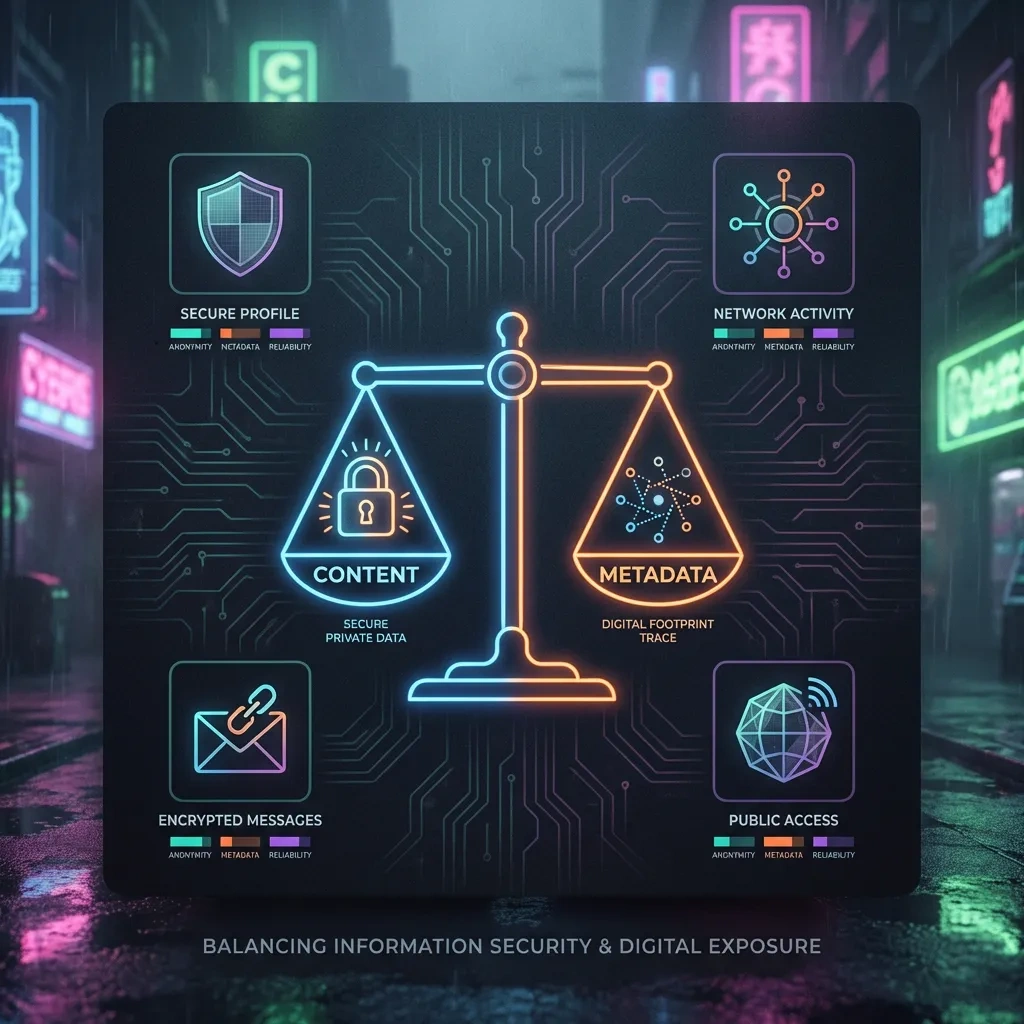
Matrix-style scoring table: anonymity, metadata, UX, resilience, and ecosystem
The following qualitative comparison summarizes tradeoffs. It avoids false precision and focuses on practical differences in 2026.
| Messenger | Anonymity | Metadata leakage | Reliability | UX | Resilience | Auditability/ecosystem |
|---|---|---|---|---|---|---|
| Signal | Low | Medium | High | High | Medium | High |
| Session | Medium to High | Low to Medium | Medium | Medium | High | Medium to High |
| SimpleX | High | Low | Medium | Medium | Medium | Medium to High |
| XMPP + OMEMO | Medium | Medium | Medium | Medium | Medium | High for protocol, variable for servers |
Open-source status, audits, and update cadence
All four are open source at the protocol and client level, with varying depths. Signal’s protocol is widely analyzed and published at signal.org/docs. Session and its Oxen service node network have public code and documentation at docs.session.xyz. SimpleX publishes specifications and reference implementations at simplex.chat. OMEMO is specified as XEP 0384 at xmpp.org and supported by multiple clients. Update cadence is typically fastest for Signal due to user base size, while decentralization means XMPP client updates vary.
Interoperability: bridging risks and why more apps can mean more exposure
Bridging between networks often strips end to end guarantees or introduces additional servers that can observe metadata and content at the bridge point. Running many messengers increases your attack surface: more push channels, more logs, more backups, and more ways to correlate your activity. Prefer fewer, well understood tools rather than an assortment of partly configured apps.
OPSEC setup checklist for safer messaging (legal, defensive use)
Device hardening basics: OS updates, full-disk encryption, screen-lock, minimal apps
- Keep OS and apps updated promptly to reduce exploit risk.
- Use full disk encryption and a strong screen lock. Favor hardware backed security features when available.
- Minimize installed apps and permissions. Reduce notifications on lock screen to limit exposure.
- Disable system wide link previews if they fetch remote resources in the background.
- Avoid rooted or jailbroken devices for sensitive communications.
Account hygiene: unique passphrases, 2FA where relevant, and recovery planning
- Use unique passphrases for device unlock and any in app PIN features. Where available, enable additional registration locks that protect against account re registration.
- Keep recovery material such as seeds or backup passwords in a safe place. Never store them alongside the device they protect.
- Plan for device loss. Decide what you can afford to lose and what you need to recover, and choose tools accordingly.
- Avoid adding contacts from system address books if that syncs identifiers to cloud services.
Verification and operational discipline: out-of-band checks and minimizing identifiers
- Verify keys or safety numbers using a channel you already trust. In person comparisons or pre established channels reduce the need to expose new identifiers.
- Re verify when an app notifies you that keys changed. Treat unexpected changes with caution.
- Avoid cross posting handles or contact invites where they can be scraped. Treat invites as sensitive artifacts.
- Do not enable cloud backups that can capture message databases or encryption keys unless you fully understand the security model.
FAQ
Which messenger leaks the least metadata in practice: Signal, Session, SimpleX, or XMPP+OMEMO?
In design, SimpleX aims to expose the least persistent metadata by avoiding global identifiers and using per contact queues. Session reduces server side metadata with onion like routing and service nodes. XMPP with OMEMO encrypts content but exposes metadata to servers and federation. Signal minimizes server retained metadata but uses phone numbers and centralized infrastructure. Real world leakage depends on your device, network, relays or servers chosen, and your own usage patterns.
Is a phone number required, and how does that affect anonymity and account recovery?
Signal requires a phone number, which ties your account to a strong real world identifier in many regions. This can simplify recovery but reduces anonymity. Session, SimpleX, and XMPP do not require phone numbers by design. They rely on keys, seeds, or server accounts for recovery, which can be safer for anonymity but unforgiving if you lose recovery material.
How do I verify I’m talking to the right person without revealing extra identity data?
Compare safety numbers, fingerprints, or verification codes via a channel you already trust, or in person. Avoid creating new accounts or posting screenshots to verify. Keep verification minimal and private. Re verify after device changes or unexpected alerts.
What are the biggest risks that encryption does not solve (device seizure, malware, backups)?
Malware on your device, physical seizure of an unlocked device, and insecure backups can expose everything. Screen content, notification previews, logs, and key material are vulnerable once the endpoint is compromised. Reduce these risks with hardened devices, minimal notifications, cautious backup choices, and strong local access controls.
Is self-hosted XMPP with OMEMO safer than using a public server?
Self hosting can reduce third party control but makes you the admin responsible for logs, patches, and configurations. A poorly run self hosted server can be worse than a well run public server. Either way, the admin sees metadata. OMEMO protects content, not who talks to whom or when.
How reliable are Session and SimpleX compared with Signal for time-sensitive messages?
Signal is generally more reliable for real time delivery due to centralized infrastructure and mature push integrations. Session and SimpleX trade some timeliness for reduced metadata exposure. Expect occasional delays, retries, or connectivity quirks, especially on constrained networks.
What should I avoid turning on (cloud backups, message previews, link previews) for privacy?
Avoid cloud backups that may store message databases or keys outside the app’s encryption. Turn off link previews that fetch remote resources in the background. Limit message previews on the lock screen and disable syncing contact lists to third party clouds.
What to use when: scenario-based recommendations by threat level
Low-to-medium risk privacy: convenience-first with strong E2EE
If your priority is secure content with mainstream reliability, and a phone number does not harm your privacy model, Signal is a practical default. It offers strong cryptography, consistent delivery, and broad adoption. Keep verification habits and registration lock enabled, and avoid linking devices you do not trust.
High-risk anonymity needs: minimizing identifiers and reducing metadata
If reducing persistent identifiers is critical, SimpleX and Session are designed to minimize centralized metadata. Expect tradeoffs: higher latency, occasional delivery issues, stricter recovery responsibilities, and fewer quality of life features. Choose one and learn its recovery and verification model before relying on it.
When to avoid chat entirely: safer alternatives and compartmentalized comms
When consequences are severe or timing analysis alone could be harmful, consider not using chat at all. Asynchronous, non digital channels, or delayed communications with strong compartmentalization reduce exposure. If you must use digital tools, minimize sessions, reduce identifiers, and limit the audience and content to what is necessary and legal.
Key takeaways
- All four tools encrypt content, but they differ significantly in metadata and identifier exposure.
- Signal is the most reliable mainstream option but assumes a phone number and central infrastructure.
- Session and SimpleX reduce persistent identifiers and server metadata, trading off speed and convenience.
- XMPP with OMEMO is flexible but shifts trust to server admins and your configuration choices.
- Endpoint compromise defeats encryption. Harden devices, control backups, and minimize notifications.
- Verification should be simple, private, and out of band using channels you already trust.
- Pick one model that matches your threat level and learn its recovery and verification paths before you need them.