




Last Updated on February 14, 2026 by DarkNet
CounterMail is a privacy-focused email service built around PGP-style end-to-end encryption for message content. It suits users who can trade convenience for control, with the core caveat that email metadata like sender, recipient, and timing is not fully hidden.

What CounterMail Is and Who It’s For
Positioning: privacy email vs secure suite
CounterMail positions itself as a secure email provider centered on OpenPGP-style end-to-end encryption for message content. It is an email-first service rather than a fully integrated productivity suite. You get tools for encrypted communication and some account-level privacy controls, not a full workplace stack with shared drives, calendars, and team chat. If you want a focused email product that prioritizes message confidentiality over convenience and extras, that is the niche CounterMail aims to serve.
Unlike mainstream inboxes, CounterMail’s model assumes you value minimizing server access to plaintext and are comfortable with the realities of PGP. That means learning how keys work, accepting limitations around metadata, and tolerating a more technical workflow compared to consumer email platforms.
Typical users and use cases
- Privacy-aware individuals who want end-to-end encrypted email without running their own infrastructure.
- Researchers, journalists, and civil society members who exchange sensitive documents and need verifiable encryption for message bodies and attachments.
- Darknet-savvy but lawful users who know email is not anonymous and still want to reduce exposure while communicating across providers.
- Small teams that can live with a leaner interface and are comfortable managing PGP keys.
When it’s not the right tool
- If you want a polished mobile app ecosystem, seamless calendars, or one-click migration from big tech email, you may be frustrated.
- If you regularly email non-PGP recipients and need the same convenience as mainstream email, a PGP-centric provider can slow you down.
- If account recovery must be easy and instant, PGP key control and stricter authentication policies may feel unforgiving.
- If you need verifiable third-party audits and a large support organization, consider bigger providers with published assessments.
Security and Privacy Architecture: What’s Promised vs What’s Verifiable
Jurisdiction and legal exposure
CounterMail operates under Swedish and broader EU jurisdiction. Swedish law and EU regulations such as GDPR set the baseline for data handling and requests. Lawful orders, cross-border assistance mechanisms, and provider obligations can apply depending on case specifics. Providers in the EU typically must respond to valid legal demands even if they cannot decrypt end-to-end encrypted content. Metadata and any server-accessible data can be subject to disclosure.
Logging, retention, and transparency signals
CounterMail emphasizes privacy-first practices and limiting access to plaintext content. Public-facing materials indicate a focus on minimizing logs, but the extent, formats, and retention windows of operational metadata are not comprehensively documented in a standardized, provider-neutral audit. As with many niche providers, there is no widely cited independent security audit or recurring transparency report available for public scrutiny. That does not imply misbehavior. It means users should decide how much they trust provider promises versus evidence they can verify.
Infrastructure and trust assumptions
CounterMail describes defense-in-depth choices such as keeping servers hardened and restricting how data is stored. The provider states that message content is end-to-end encrypted between PGP-capable endpoints, leaving the server unable to read bodies and attachments when encryption is used correctly. Still, email routing, anti-abuse controls, and webmail delivery require some server-side handling that exposes metadata. You must also trust the web application to implement client-side cryptography faithfully and to deliver the same code to all users. Without reproducible builds or an independent code audit, this remains a trust assumption. As with any hosted email, the service can be compelled to preserve or hand over logs or other non-content data where legally required.
Encryption and Key Management: PGP, Client-Side Handling, and Metadata Limits
What E2E protects and what metadata leaks
End-to-end encryption protects the email body and attachments when both sides use compatible PGP and the message is encrypted before leaving your device. The server stores only ciphertext. However, email by design reveals significant metadata to enable delivery:
- Sender and recipient addresses are visible in headers.
- Subject lines are typically visible with traditional PGP because they live in headers. Some workflows hide the real subject in the encrypted body and use a placeholder header, but that requires discipline and compatible clients.
- Timestamps, routing information, and deliverability headers are exposed.
- Login context like IP addresses and user agents may be logged operationally, even if limited.
- Transport encryption with TLS protects hops between servers from passive network observers, but it is not end-to-end. Only PGP or a similar scheme provides content confidentiality from your device to the recipient’s device.
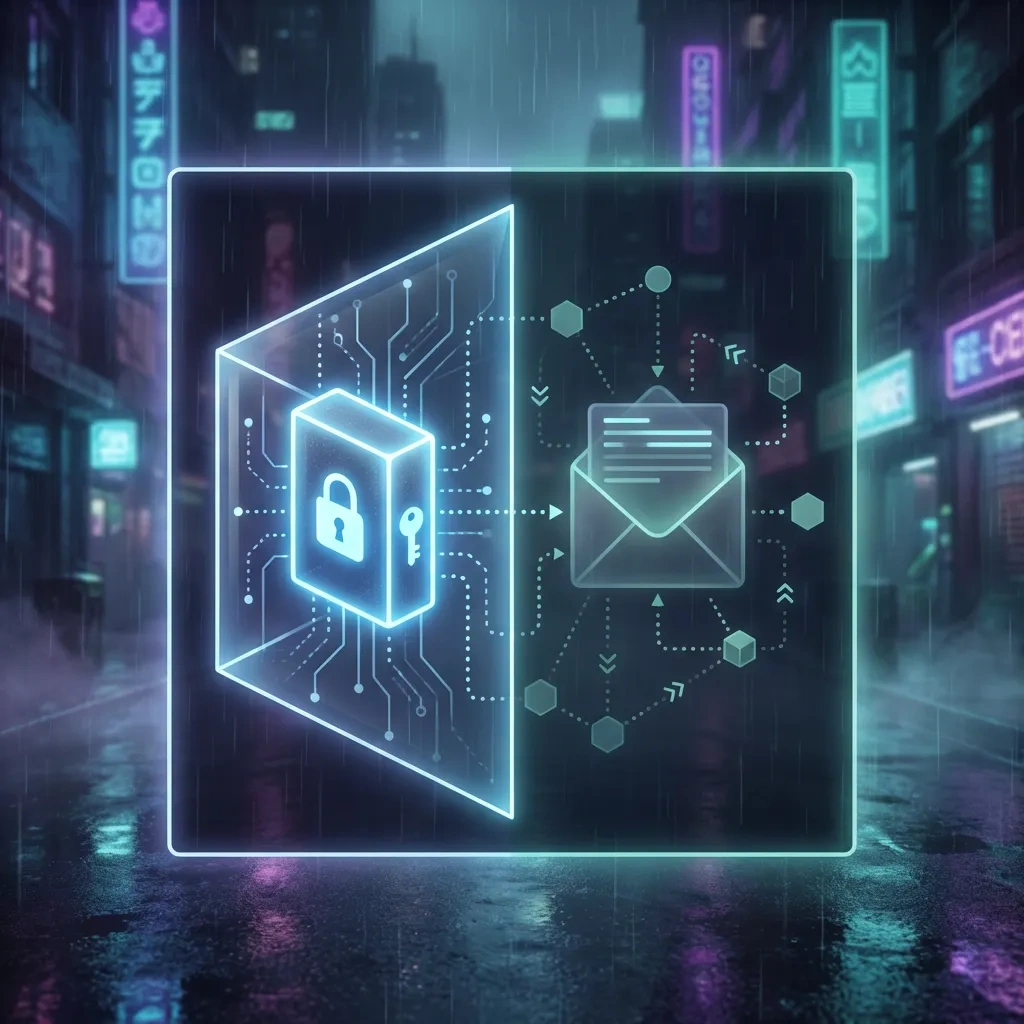
Bottom line: end-to-end encryption secures message contents against the provider and network eavesdroppers, but it does not make your email anonymous or metadata-free.
Key generation, storage, and recovery tradeoffs
CounterMail relies on OpenPGP-compatible keys. Keys are typically generated client-side, and your private key is protected by a passphrase. When implemented properly, the provider cannot decrypt your content without that passphrase. This creates a classic tradeoff:
- Security: You control your private key and passphrase. Server compromise reveals ciphertext, not plaintext.
- Recovery risk: Lose your passphrase and any key backups, and your old encrypted mail may be unrecoverable. There is no magical reset that re-derives a lost private key.
Practical safeguards include maintaining an offline backup of your private key, using a strong unique passphrase, and rotating keys responsibly. Always understand how key export and import work before committing important data to any PGP-based provider. For reference on the OpenPGP format, see RFC 4880 here.
Interoperability with external PGP users
A benefit of using OpenPGP is cross-provider communication. You can exchange keys with non-CounterMail contacts and send encrypted messages using standard PGP/MIME. Expect minor friction: recipients may use different clients, have older keys, or prefer inline PGP. Attachments and subject handling vary by client. A short out-of-band key verification step reduces the chance of spoofed keys and improves security.
Account Access and Authentication: Passwords, 2FA, and Device Security
Auth options and baseline setup
Good practice with CounterMail starts with a long, unique account password and enabling a second factor if offered. CounterMail emphasizes strengthened login by supporting an additional factor tied to something you physically possess, such as a key file stored on removable media. Confirm current options in the provider’s official materials and enable the highest-entropy option you can manage responsibly. Avoid password reuse and store recovery details securely.
Session and device compromise risks
E2E encryption does not protect you if your endpoint is compromised. Malware can capture keystrokes, exfiltrate private keys, or hijack an authenticated web session. Browser extensions and injected scripts can also weaken client-side cryptography. To reduce risk:
- Keep devices updated, limit extensions, and avoid untrusted networks for sensitive sessions.
- Log out after use and clear active sessions on suspicion of compromise.
- Prefer separate profiles or dedicated browsers for sensitive accounts.
Recovery and lockout scenarios
Expect stricter recovery compared to mainstream email. Losing your account password, your second factor, and your private key can permanently lock you out of old encrypted mail. Retain secure backups of your key material and any additional factor required for login. If you contact support, be prepared for identity verification that does not reveal your passphrase. Plan ahead rather than relying on emergency resets.
Usability and Product Experience: Webmail, Mobile, and Workflow Fit
Interface and learning curve
CounterMail’s web interface is functional and focused on encryption flows. It expects users to understand key handling basics and how encrypted threads behave across providers. Compared to mainstream inboxes, the UI feels more utilitarian. Power users who value privacy over polish will adapt quickly. Casual users may find the learning curve steeper, especially with key exchange and subject handling conventions.
Mobile access and limitations
Mobile usage is the hardest part of PGP-centric email. First-party mobile apps tend to be limited or absent for niche providers, and using third-party clients requires careful key management. If you plan to use your phone for encrypted threads, test your workflow in advance. Expect tradeoffs between convenience and control. Many users keep sensitive threads on desktop and reserve mobile for less sensitive communications.
Migration from existing providers
Moving from a mainstream inbox to a PGP-first provider takes time. Consider:
- Mail import and export: assess whether you can bring historical mail in standard formats without losing folder structure.
- Contacts: verify support for encrypted address book fields and safe export.
- Custom domains and DNS: if you use your own domain, plan SPF, DKIM, and DMARC changes to preserve deliverability.
- User education: notify frequent contacts about your encryption preferences and share your public key through a verified channel.
Reliability, Support, and Operational Risks
Uptime, deliverability, and spam controls
CounterMail aims for solid uptime, but no email provider is immune to outages. Deliverability to large providers can fluctuate due to ecosystem policies, reputation scoring, and anti-abuse systems outside CounterMail’s control. Spam filtering quality is serviceable but not as aggressive or data-rich as the largest consumer platforms. Users who expect enterprise-grade deliverability should monitor sending domains and keep DMARC reports under review.
Support and documentation
As a specialized provider, CounterMail tends to have leaner support capacity than mass-market inboxes. Documentation covers the core model, but it is not as exhaustive as large vendor knowledge bases. Before committing, review official pages to confirm current capabilities: CounterMail. Expect that complex configurations or advanced forensics are your responsibility.
Continuity planning and provider shutdown risk
Small, privacy-focused services face unique pressures, from payment processor issues to evolving regulations. Build an exit plan:
- Maintain independent backups of your private keys and essential messages.
- Use your own domain so you can migrate MX records if needed.
- Keep an alternate contact method published for urgent communications.
- Periodically review provider status and announcements.
Pricing, Plans, and Value Compared to Alternatives
What you get for the cost
CounterMail’s value proposition is straightforward: you pay for a focused secure email environment where encrypted content is first-class and server visibility into plaintext is reduced. Typical inclusions revolve around an inbox with PGP support, a quota for storage, some number of aliases, and optional features like custom domain support depending on plan. Pricing tends to land in the mid-range for privacy email. If you want a broad collaboration suite or the smoothest mobile experience, competing options may deliver better price-to-convenience. If you want durable message confidentiality within an email-first workflow, CounterMail aligns with that need set.
Comparison snapshot vs Proton Mail, Tuta, Mailbox.org, and self-hosting
| Provider | Core model | Apps and UX | Custom domains | Audit/transparency signals | Notes |
|---|---|---|---|---|---|
| CounterMail | OpenPGP content encryption with a privacy-first webmail | Utilitarian web UI, limited mobile convenience | Typically available on paid tiers | No widely cited third-party audit public | Strong focus on content confidentiality; metadata persists |
| Proton Mail | End-to-end encrypted suite features with PGP support | Modern web and mobile apps | Yes on paid plans | Publishes security papers and transparency posts Docs | Easier onboarding; larger ecosystem |
| Tuta | Built-in end-to-end encryption including subject lines | Web and mobile apps focused on simplicity | Yes on paid plans | Public feature and security notes FAQ | Not OpenPGP by default; good for internal Tuta traffic |
| Mailbox.org | Business-friendly email with optional PGP integration | Robust features, classic UX | Yes | Clear documentation and enterprise posture Features | Strong deliverability focus; more suite-like |
| Self-hosting | Your mail server plus local PGP | Depends on your stack | Yes | You are your own auditor | Maximum control with high complexity and ongoing maintenance |
Hidden costs: time and complexity
Most costs are not monetary. Expect time spent on key handling, onboarding contacts to PGP, testing mobile tradeoffs, and maintaining a migration path. The learning curve is the price you pay for stronger control over message confidentiality. For some, that cost is negligible. For others, it is a daily tax.
Pros, Cons, and Decision Checklist by Threat Model
Strongest pros
- End-to-end encryption for message bodies and attachments using OpenPGP standards.
- Provider positioning that prioritizes privacy over convenience.
- Second-factor login option tied to something you physically control, improving resistance to password-only attacks.
- Interoperability with external PGP users across providers.
- Clear separation between content protection and unavoidable email metadata, avoiding overpromises.
Biggest cons and possible deal-breakers
- No widely publicized third-party security audit or frequent transparency reports to independently validate claims.
- Metadata exposure remains inherent to email: sender, recipient, subject headers in most PGP flows, timestamps, routing data.
- Mobile experience and cross-device convenience are limited compared to larger ecosystems.
- Account recovery can be unforgiving if you lose both passphrase and key material.
- Deliverability and spam filtering are good but may lag behind the largest consumer platforms.
| Pros | Cons |
|---|---|
| End-to-end encrypted content with OpenPGP standards | Email metadata remains exposed by design |
| Interoperability with external PGP users | Learning curve and less polished UX |
| Privacy-first posture with minimal feature bloat | Limited mobile convenience and app ecosystem |
| Second-factor login option with a physical element | Tough recovery if passphrase or key backups are lost |
| Predictable, focused scope for secure email | No widely cited independent audit in public view |
Decision checklist by risk level
Low risk – privacy for everyday life:
- Goal: reduce casual data exposure and keep messages private from providers.
- Action: enable second-factor login, use a password manager, learn basic PGP exchange with a few close contacts.
- Tradeoff: accept limited mobile convenience and occasional friction with non-PGP recipients.
Medium risk – sensitive communications with professional stakes:
- Goal: protect message content against service and network exposure while retaining usability.
- Action: maintain offline backups of private keys, standardize PGP/MIME with key contacts, document recovery steps, verify public keys out of band.
- Tradeoff: invest time in training and periodic key rotation. Plan deliverability and domain reputation if you send at scale.
High risk – targeted scrutiny is plausible:
- Goal: minimize attack surface and accept stricter workflows.
- Action: use dedicated devices or profiles, restrict browser extensions, keep sensitive threads off mobile, and maintain contingency plans for provider downtime or account loss.
- Tradeoff: strong security habits reduce usability. Email metadata is still exposed, so pair email with other tools when metadata sensitivity is critical.
FAQ: common questions about CounterMail and encrypted email
Is CounterMail anonymous?
No email provider can promise true anonymity. End-to-end encryption protects content, not identity. Email reveals sender and recipient addresses, delivery timing, and other metadata. Account creation, payment, and network context can link back to you depending on your choices and local laws.
How is transport encryption different from end-to-end encryption?
Transport Layer Security encrypts the connection between mail servers and clients, stopping passive eavesdroppers on the network. End-to-end encryption encrypts the message content from your device to the recipient’s device, preventing the provider from reading it in transit or at rest. Both are useful. Only E2E protects message bodies and attachments from the provider itself.
Are subject lines encrypted?
With classic OpenPGP, subject lines live in headers and are not encrypted. Some workflows use a placeholder subject and put the real subject inside the encrypted body. This requires compatible clients and user discipline. Services that do non-PGP schemes may encrypt subjects internally, but cross-provider behavior varies.
Can I email people who do not use PGP?
Yes, but messages sent in plaintext to non-PGP recipients are not end-to-end encrypted. When confidentiality matters, exchange keys and use PGP/MIME. If encryption is not feasible, consider alternative channels for sensitive content.
Where can I learn more about PGP itself?
OpenPGP is standardized. For technical details, see RFC 4880 at the IETF RFC Editor here. Many client guides also exist, but stick to official documentation for your specific software.
- Alternative references: Proton Mail’s E2E overview here, Tuta’s FAQ here, and mailbox.org features page here.
Final verdict
CounterMail fits users who want an email-first service that treats end-to-end encrypted content as the default objective and who accept the realities of email metadata. It trades convenience for control. If you want best-in-class mobile UX and a large audited ecosystem, look elsewhere. If you want a focused inbox that keeps message bodies confidential using an open standard and you are willing to learn PGP basics, CounterMail is a defensible choice.
Key takeaways
- CounterMail is a PGP-first secure email provider that prioritizes encrypted content over convenience.
- Email metadata like sender, recipient, subject headers in most PGP flows, and timestamps remain visible by design.
- Expect a utilitarian web UI, limited mobile convenience, and a learning curve for key management.
- No widely cited independent audit is public, so trust is based on stated practices and your risk tolerance.
- For high-stakes use, pair CounterMail with disciplined endpoint security and a tested recovery plan.
- If you need polished apps and a broader suite, consider alternatives like Proton Mail, Tuta, or mailbox.org.