




Last Updated on June 19, 2026 by DarkNet
This review explains what StartMail offers for privacy-conscious users, how its encryption and aliases work, and where its limits are. You will learn how StartMail compares to Proton Mail, Tutanota, Fastmail, and Gmail or Outlook, and get a practical checklist and decision matrix to guide your choice.

What StartMail Is and Who It’s For
Service overview and positioning
StartMail is a paid email service created by the team behind Startpage. It focuses on private email with OpenPGP-based encryption and practical tools like aliases and IMAP or SMTP access. The service aims to balance privacy with compatibility, so it works with common clients such as Outlook, Thunderbird, and Apple Mail while offering a capable webmail with built-in PGP.
Because StartMail is a traditional email provider that interoperates broadly, you can send and receive with mainstream services. When you use OpenPGP with other PGP-capable users, messages can be end-to-end encrypted. When you message mainstream providers, transport encryption and authentication controls still help with confidentiality-in-transit and deliverability, but content is not end-to-end encrypted by default.
Primary use cases and user profiles
- Privacy-first individuals and small teams who want a classic email experience with optional PGP.
- Users who value aliases for compartmentalization, spam reduction, and phishing resistance.
- Professionals who need custom domain support and interoperability with standard clients.
- Developers and security-aware users who prefer standards-based encryption and open protocols.
Threat models StartMail addresses vs limits
- Addresses: Passive surveillance on public Wi-Fi via TLS in transit, credential stuffing via 2FA, inbound spoofing via SPF, DKIM, and DMARC, and inbox correlation risk via aliases.
- Limits: Email metadata exposure by design, recipient-side compromise, and non-PGP correspondence where content is not end-to-end encrypted. Legal requests may apply under Dutch or EU law.
For high-assurance, metadata-minimizing messaging, dedicated secure messengers may be more appropriate. StartMail is a private email service, not a deniable or metadata-hidden communications system.
Privacy Model: What StartMail Can and Can’t See
Server-side access, inbox encryption, and PGP model
StartMail supports OpenPGP end-to-end encryption. When both sender and recipient use compatible PGP and manage their private keys securely, message bodies and attachments can be protected from provider access. StartMail’s webmail integrates with PGP to simplify key generation and exchange. Details such as how private keys are stored and protected depend on StartMail’s current implementation and your configuration. Review StartMail’s official documentation for the latest specifics on keys and encryption workflows (StartMail documentation, official: support.startmail.com). For the underlying standards, see OpenPGP (RFC 4880) and OpenPGP/MIME (RFC 3156).
If you do not use PGP for a given message, StartMail may still protect data at rest on its servers and uses TLS for transport, but server-side access is generally more permissive than true end-to-end encryption. This is standard for most email services unless content is protected by client-held keys.
Metadata that remains exposed by email standards
Even with PGP, certain metadata is usually visible to servers involved in mail routing and to recipients:
- Sender and recipient addresses (From, To, CC), routing headers, and timestamps.
- Message size and IP-level routing data among relays that handle transport.
- Subject lines are typically outside the encrypted payload in OpenPGP workflows, unless both parties use subject protection techniques that are not universal.
Because this exposure is inherent to email standards, it is important to use aliases for compartmentalization and to avoid reusing the same address widely. You cannot remove all metadata from email while retaining full interoperability.
IP handling, web logs, and policy-dependent elements
What StartMail can observe depends partly on how you connect (web vs IMAP or SMTP), your client configuration, and the provider’s current policies. Web servers typically record requests and error conditions, and SMTP servers process connection metadata to deliver mail. Consult StartMail’s privacy policy and technical pages for current practices and retention timelines (StartMail privacy and terms, official: startmail.com, startmail.com). Keep your client set to use TLS, and consider privacy-preserving network settings to reduce incidental exposure during login and sync.
Security Features: Encryption, Authentication, and Account Protections
OpenPGP support and interoperability
StartMail’s web interface supports OpenPGP, enabling encrypted and signed messages with compatible peers. You can import existing keys or generate new ones and share public keys with contacts. Because StartMail adheres to standards, you can exchange encrypted messages with other PGP-capable clients, not just StartMail users. For the specification and message structure, see RFC 4880 and RFC 3156.
TLS in transit and sender authentication (SPF, DKIM, DMARC)
StartMail uses TLS for connections to its servers and for SMTP transport where supported by the receiving side. TLS aims to protect the channel but does not encrypt messages end to end. For sender identity and anti-spoofing, StartMail supports DNS-based controls that you manage for your custom domain: SPF (RFC 7208), DKIM (RFC 6376), and DMARC (RFC 7489). Properly configured, these reduce phishing and improve deliverability.
2FA, recovery options, and password practices
StartMail offers two-factor authentication with time-based one-time passwords. Enable 2FA and store recovery codes securely to mitigate credential theft. Strong, unique passwords and a reputable password manager are recommended. Account recovery options help with availability but may influence risk: the more recovery channels you enable, the more paths exist for social engineering. Choose conservative recovery settings that match your threat model and keep backups offline.
Usability and Email Workflow: Apps, Clients, and Daily Reliability
Webmail experience and search
StartMail’s webmail is straightforward and integrates encryption, signature checks, and alias management into normal workflows. Search, filters, and folders work as expected for a modern client. If you rely on encrypted mail, be aware that searching the content of end-to-end encrypted messages may be limited to decrypted copies in your browser session or client.
IMAP or SMTP with popular clients
You can connect StartMail with standard clients like Outlook, Thunderbird, and Apple Mail via IMAP and SMTP. Use StartMail’s official setup guides for ports, TLS, and authentication specifics (StartMail setup, official: support.startmail.com). With external clients, encryption can be handled by your client (for example, Enigmail in Thunderbird or system keychains). Test your PGP workflows end to end before relying on them.
Deliverability, filtering, and support
Deliverability depends on proper DNS configuration for custom domains and consistent sending practices. Use SPF, DKIM, and DMARC to reduce spam classification. StartMail includes server-side filters and spam controls, and you can use aliases to redirect less-trusted signups into a separate label or folder. For troubleshooting, consult StartMail’s support portal (official: support.startmail.com).
Anonymous Aliases and Disposable Addresses: Benefits and Limitations
Permanent aliases and domain options
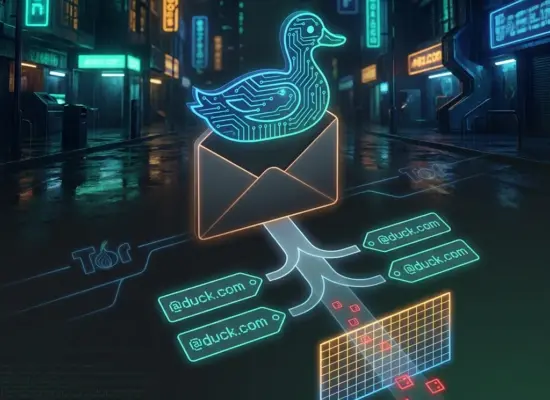
StartMail lets you create additional addresses that deliver into your primary inbox. These can be used to separate newsletters, vendor accounts, social networks, and sensitive contacts. Some plans include multiple permanent aliases and optional domain choices. Aliases protect your main address from exposure and make it easier to rotate away from a data breach or spam.
Disposable aliases management and lifespan
Disposable or temporary aliases are helpful when you cannot fully trust a site with your primary email. With StartMail, you can generate aliases and deactivate them later if abuse occurs. Manage these in the web interface so you can retire or replace them quickly. Keeping a simple naming convention helps you know which alias to disable after a leak.
Limits, reputation, and recovery trade-offs
Aliases reduce correlation and spam, but they do not remove metadata from messages. Recipients still see the alias domain and route data. Frequent alias churn may affect deliverability if abused. Also consider account recovery: if you register critical accounts under throwaway aliases that you later disable, you may block password resets. For high-value accounts, maintain a stable, well-protected address dedicated to recovery.
Data Handling and Jurisdiction: Netherlands/EU Context and Legal Requests
Company location and GDPR context
StartMail is based in the Netherlands and operates under EU data protection law. The General Data Protection Regulation sets requirements for data processing, user rights, and breach notifications. See the European Commission’s overview for the legal framework (GDPR overview). Review StartMail’s privacy policy for how these duties are implemented (official: startmail.com).
Lawful request process and provider capabilities
Like other providers, StartMail can receive legal requests under applicable law. What can be produced depends on what data is stored, retention periods, and whether specific content is end-to-end encrypted and key-protected. StartMail’s documentation may outline how such requests are handled and what legal thresholds apply. Verify current practices in official resources and terms (official: startmail.com).
Cross-border routing realities
Email commonly traverses multiple networks and jurisdictions. Even if your provider is in the EU, a message to a non-EU recipient may transit or be stored in other countries. This is normal for SMTP, and it reinforces the value of end-to-end encryption and cautious metadata practices. Consider recipients, not just your provider, when evaluating risks.
Pricing, Plans, and Value Compared to Alternatives
Plans and features overview
StartMail is a paid service with individual and business options. Plans typically include a primary mailbox, PGP support in webmail, aliases, and IMAP or SMTP access. Storage, number of aliases, and domain options vary by plan. For the most current pricing and bundles, consult StartMail’s official site (official: startmail.com).
Value assessment by user type
- Privacy-focused individuals: Good value if you want standards-based encryption and strong aliasing without switching to a closed ecosystem.
- Professionals with custom domains: Solid balance of control and interoperability. SPF, DKIM, and DMARC setup is supported.
- Teams that live in desktop clients: IMAP or SMTP support keeps your existing workflow intact.
Comparison to alternatives
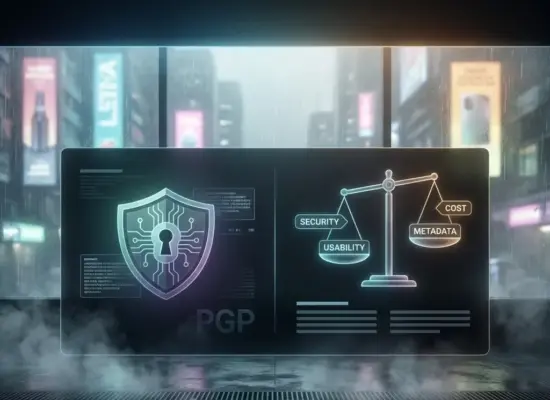
The table below summarizes trade-offs. Always verify current features and policies with each provider.
| Provider | End-to-end by default | IMAP or SMTP | Aliases | Custom domain | Jurisdiction | Notable strengths | Trade-offs |
|---|---|---|---|---|---|---|---|
| StartMail | No for all mail, Yes with PGP per message | Yes | Yes, permanent and disposable | Yes | Netherlands, EU | Standards-based PGP, strong aliasing, broad client support | Subjects and metadata typically exposed; E2EE depends on PGP setup |
| Proton Mail | Yes within ecosystem | Bridge app for IMAP or SMTP on paid plans | Yes | Yes | Switzerland | Integrated E2EE between Proton users, good apps | Bridge adds complexity for desktop clients; interoperability can fall back to non-E2EE |
| Tutanota | Yes within ecosystem | No standard IMAP or SMTP | Yes | Yes | Germany, EU | E2EE and calendar in one platform | Limited interoperability with standard clients; no IMAP or SMTP |
| Fastmail | No by default | Yes | Yes | Yes | Australia, with global infrastructure | Excellent usability, rules, deliverability | No built-in E2EE for content; relies on TLS and client-side tools |
| Gmail or Outlook | No by default | Yes | Aliases and rules vary | Yes | United States and global | Ubiquity, integrations, strong spam filtering | Privacy trade-offs; no native PGP integration in web clients |
Key Pros and Cons Summary (Decision Matrix)
Quick checklist
- I need standards-based OpenPGP support that works with non-StartMail users.
- I will use aliases for compartmentalization to limit tracking and spam.
- I am comfortable managing keys or using webmail for PGP when needed.
- I want IMAP or SMTP access for Outlook, Thunderbird, or Apple Mail.
- I accept that email metadata remains visible by design.
- My recipients include mainstream providers, so not all mail will be end-to-end encrypted.
- I need a paid service with EU privacy posture and custom domain support.
Decision matrix table
| Criterion | Priority | StartMail Fit | Notes |
|---|---|---|---|
| End-to-end encryption across contacts | High | Conditional | Strong with PGP-capable peers; otherwise falls back to TLS in transit. |
| Metadata minimization | High | Limited | Email exposes headers and subjects typically; use aliases to compartmentalize. |
| Client interoperability | High | Strong | Works with IMAP or SMTP and common clients. |
| Usability with aliases | Medium | Strong | Permanent and disposable aliases supported for spam and tracking reduction. |
| Custom domain and deliverability | Medium | Strong | SPF, DKIM, and DMARC supported with proper setup. |
| App ecosystem | Low to Medium | Moderate | Webmail plus standard clients; no proprietary mobile ecosystem required. |
| Jurisdiction preference | Medium | Strong | EU-based with GDPR obligations. |
Pros and Cons
- Pros
- Standards-based OpenPGP with webmail integration for encrypted messages.
- IMAP or SMTP for use with Outlook, Thunderbird, and Apple Mail.
- Robust aliasing options to contain leaks and reduce phishing exposure.
- EU jurisdiction and GDPR obligations.
- Sender authentication tools (SPF, DKIM, DMARC) for custom domains.
- Cons
- End-to-end encryption is not automatic for all recipients; setup is required for PGP.
- Email metadata remains visible by design, including headers and typically subject lines.
- Key management and recovery choices require careful planning.
- Feature set may be lighter than integrated ecosystems that bundle calendars, storage, and proprietary apps.
When StartMail Is a Good Fit—and When to Choose Something Else
Good-fit scenarios
- You value privacy improvements within standard email and want PGP support when needed.
- You plan to use aliases to compartmentalize signups and reduce tracking or spam.
- You need IMAP or SMTP and the freedom to use your favorite desktop or mobile client.
- You prefer an EU-based provider with a clear privacy posture and support for custom domains.
Consider alternatives when
- You require end-to-end encryption by default across your entire contact list and want minimal configuration. Ecosystem services like Proton Mail or Tutanota may be simpler for E2EE among their users.
- You want a bundled productivity suite or deep integrations that exceed email scope. Fastmail, Gmail, or Outlook may align better with broader tooling.
- Your threat model prioritizes metadata minimization over broad interoperability. Email standards may not meet that requirement.
FAQ: Is StartMail end-to-end encrypted by default?
No. StartMail supports OpenPGP for end-to-end encryption on a per-message basis with compatible recipients. Messages to mainstream providers are usually protected by TLS in transit but are not end-to-end encrypted unless you use PGP with the recipient. See OpenPGP standards (RFC 4880, RFC 3156) and StartMail’s documentation (official: support.startmail.com).
FAQ: What information can StartMail see (subject lines, headers, IP logs)?
It depends on encryption and policy. Without PGP, the provider can typically access message content on the server. With PGP, bodies and attachments may be end-to-end encrypted, but typical email metadata such as sender, recipient, routing headers, and timestamps remains visible. Subject lines are usually outside the encrypted payload. IP and access logs depend on server configuration and retention policies. Review StartMail’s privacy policy for current details (official: startmail.com).
FAQ: How do StartMail aliases work, and can I create unlimited addresses?
StartMail supports permanent and disposable aliases that deliver mail into your account. You can create and retire them to isolate signups and reduce spam. The number of aliases varies by plan. Check plan details on StartMail’s official site for current limits (official: startmail.com).
FAQ: Can I use StartMail with Outlook, Thunderbird, or Apple Mail via IMAP or SMTP?
Yes. StartMail supports IMAP and SMTP, so you can use mainstream clients. Use TLS and follow StartMail’s configuration guides for server names, ports, and authentication (official: support.startmail.com).
FAQ: How does StartMail compare to Proton Mail for privacy and usability?
Proton Mail offers end-to-end encryption by default within its ecosystem and native apps, with a bridge for IMAP or SMTP. StartMail emphasizes standards-based PGP in a classic email workflow with direct IMAP or SMTP. If you prioritize E2EE among same-provider users, Proton Mail may be simpler. If you want broad client compatibility plus PGP when needed, StartMail is strong.
FAQ: Is StartMail a good choice for using a custom domain?
Yes. StartMail supports custom domains with SPF, DKIM, and DMARC. Proper DNS configuration improves deliverability and anti-phishing protections. See SPF (RFC 7208), DKIM (RFC 6376), and DMARC (RFC 7489).
FAQ: What happens if I lose access—how does account recovery affect security?
Recovery options improve availability but can add attack surface. Enable 2FA and store recovery codes securely. If your PGP private key is protected by a passphrase only you know, losing that passphrase can make encrypted content unrecoverable. Choose recovery settings that match your risk tolerance and document them offline. Consult StartMail’s support docs for current recovery procedures (official: support.startmail.com).
- Key takeaways
- StartMail delivers a standards-based privacy upgrade with PGP, aliases, and IMAP or SMTP.
- Email metadata is exposed by design, so compartmentalization is crucial.
- End-to-end encryption is available but not automatic; test your PGP workflows.
- EU jurisdiction and GDPR provide a clear legal framework for data handling.
- For default E2EE across an ecosystem, consider Proton Mail or Tutanota.
- For classic workflows and clients with privacy enhancements, StartMail is a good fit.
- Plan alias and recovery strategies carefully to balance usability and security.